
Crafting your hospitality career toolkit

The Career Toolkit is a curated series of 16 insightful articles designed to guide hospitality students and professionals through every step of their career journey. From building standout resumes to mastering interviews and exploring career paths, this toolkit offers practical tips and industry-focused advice for lasting success in hospitality.
This entry is part 8 of 8 in the series Crafting your hospitality career toolkit
In the hospitality industry, first impressions are not just important—they are everything. Whether it’s a guest walking into a hotel lobby or a recruiter reviewing your job application, the initial interaction often determines what comes next. Yet, many aspiring hospitality professionals underestimate one crucial component of their application: the cover letter. In this context, understanding how to write effective cover letters in hospitality becomes essential.
A resume may outline your qualifications, but a cover letter tells your story. It bridges the gap between your experience and the employer’s expectations, offering context, personality, and intent. In a service-driven industry like hospitality—where communication, attitude, and attention to detail are paramount—a well-crafted cover letter is not optional; it is strategic.
This article explores how to create a compelling hospitality cover letter that positions you as a strong, thoughtful, and service-oriented candidate.
Why Cover Letters Matter in Hospitality
Hospitality is inherently people-centric. Employers are not just hiring skills; they are hiring personalities, attitudes, and service mindsets. A resume cannot fully convey these attributes. A cover letter, however, allows you to demonstrate them through tone, storytelling, and clarity of purpose.
For example, when applying for roles in hotels, restaurants, or travel services, recruiters often look for candidates who can communicate effectively, show genuine enthusiasm, and understand guest expectations. A generic or poorly written cover letter signals a lack of effort—something that is immediately concerning in a detail-oriented industry.
More importantly, a cover letter gives you the opportunity to tailor your application to a specific organization. Whether you are applying to a luxury hotel chain or a boutique property, your cover letter can reflect your understanding of their brand, service philosophy, and customer base.
Writing Effective Cover Letters in Hospitality
A strong cover letter is not about length—it is about clarity, relevance, and impact. Structurally, it should follow a logical flow that aligns your profile with the employer’s needs.
Opening: Capturing Attention Immediately
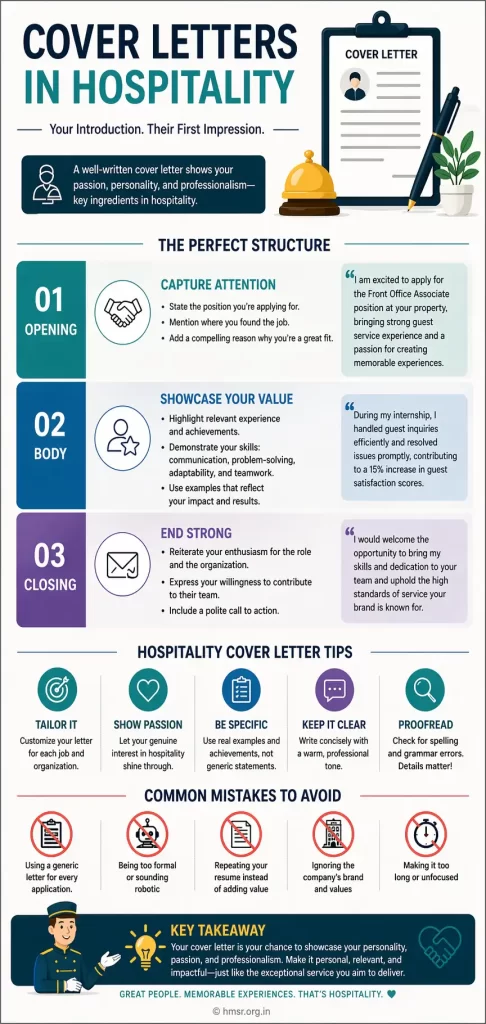
The opening paragraph should be direct and engaging. Avoid vague introductions. Instead, clearly state the position you are applying for and briefly highlight why you are a suitable candidate.
For instance, instead of saying:
“I am writing to apply for a position at your hotel,”
A more effective approach would be:
“I am excited to apply for the Front Office Associate position at your property, bringing hands-on experience in guest relations and a strong commitment to service excellence.”
This immediately communicates intent and value.
Body: Aligning Your Experience with the Role
The core of your cover letter should focus on demonstrating how your skills and experiences align with the job requirements. This is where many candidates go wrong—they repeat their resume instead of interpreting it.
In hospitality, recruiters are particularly interested in:
- Guest service experience
- Problem-solving abilities
- Communication skills
- Adaptability in dynamic environments
Rather than listing responsibilities, emphasize outcomes and real scenarios. For example, describe how you handled a difficult guest situation or contributed to improving service efficiency.
This approach connects directly with concepts discussed in earlier articles such as tailoring your resume and highlighting soft skills, where contextual relevance is critical.
Closing: Creating a Strong Final Impression
The closing paragraph should reinforce your interest and express willingness to contribute. It should also include a polite call to action.
A strong closing does not beg for a job—it positions you as a candidate worth considering.
For example:
“I would welcome the opportunity to contribute to your team and uphold the high standards of guest service your organization is known for.”
This maintains professionalism while demonstrating confidence.
Common Mistakes in Hospitality Cover Letters
Even strong candidates often undermine their applications through avoidable errors. The most frequent issues include lack of personalization, overly generic language, and failure to connect with the organization’s values.
Here are key pitfalls to avoid:
- Using a generic template for all applications
Hospitality employers expect customization. A one-size-fits-all letter signals low engagement. - Overly formal or robotic tone
Hospitality is about warmth and human connection. Your tone should reflect that. - Repeating resume content without adding insight
Your cover letter should interpret your experience, not duplicate it. - Ignoring the employer’s brand identity
Whether it’s a luxury brand or a budget chain, your letter should align with their service style.
These mistakes are closely related to issues discussed in earlier articles, particularly around common resume mistakes and effective formatting, reinforcing the need for consistency across all application documents.
Hospitality-Specific Writing Approach
Unlike many other industries, hospitality values emotional intelligence and service orientation as much as technical skills. Your writing should subtly reflect these attributes.
Instead of focusing only on what you did, emphasize how you made guests feel. Words like “enhanced guest satisfaction,” “ensured seamless service,” or “created memorable experiences” resonate strongly in this sector.
Additionally, your language should remain concise yet expressive. Avoid overly complex vocabulary; clarity and warmth are far more effective.
Hospitality Example Snippet
Consider the following example tailored for a hotel front office role:
“During my internship at a four-star hotel, I managed guest check-ins and resolved service-related concerns efficiently, contributing to improved guest satisfaction scores. I take pride in creating a welcoming environment and ensuring that every guest interaction reflects professionalism and care.”
This snippet works because it:
- Highlights relevant experience
- Demonstrates impact
- Reflects a service-oriented mindset
Integrating Your Cover Letter with Digital Profiles
In today’s recruitment landscape, your cover letter does not exist in isolation. Employers often cross-reference applications with online profiles, particularly on platforms like LinkedIn.
Your cover letter should align with your digital presence. If your profile highlights leadership or customer service achievements, your letter should reinforce those themes. Consistency builds credibility.
Recommended Reading
To strengthen your overall application strategy, revisit the following articles from the series:
- How to Craft a Winning Hospitality Resume: Essential Tips and Best Practices
- How to Highlight Soft Skills in Your Hospitality Resume
- Common Resume Mistakes in the Hospitality Industry and How to Avoid Them
These resources complement your cover letter by ensuring that every component of your application communicates a unified message.
Key Takeaway
A hospitality cover letter is not just a formality—it is your first demonstration of service excellence. Focus on clarity, personalization, and relevance. Align your experience with the employer’s expectations, maintain a professional yet warm tone, and ensure consistency with your resume and online profiles.
Conclusion
In the competitive hospitality job market, differentiation is critical. While many candidates may have similar qualifications, not all can communicate their value effectively. A well-crafted cover letter gives you that advantage. Mastering cover letters in hospitality can significantly improve your chance of getting an competitive edge.
It allows you to move beyond credentials and present yourself as a professional who understands service, values guest experience, and is genuinely interested in contributing to the organization.
Approach your cover letter with the same care you would offer a guest—thoughtful, personalized, and precise. That mindset alone can set you apart and open doors to your dream role in the hospitality industry.
In this article
Author

Discover more from HMSR
Subscribe to get the latest posts sent to your email.