
Crafting your hospitality career toolkit
The Career Toolkit is a curated series of 16 insightful articles designed to guide hospitality students and professionals through every step of their career journey. From building standout resumes to mastering interviews and exploring career paths, this toolkit offers practical tips and industry-focused advice for lasting success in hospitality.
This entry is part 7 of 7 in the series Crafting your hospitality career toolkit
In today’s hospitality industry, where competition is fierce and first impressions often happen online, having strong Digital Portfolios and Online Profiles can be the key to landing your dream job. These tools not only help recruiters see beyond your resume but also offer a dynamic, interactive showcase of your abilities, achievements, and professional journey.
Let’s delve into how Digital Portfolios and Online Profiles can enhance your hospitality job application, what to include, and how to make them stand out in a crowded marketplace.
Table of Contents
- Why Digital Portfolios and Online Profiles Matter in Hospitality
- What is a Digital Portfolio in Hospitality?
- Best Platforms for Hospitality Portfolios and Profiles
- Essential Elements in Digital Portfolios and Online Profiles
- How to Optimize for Visibility
- Mistakes to Avoid When Creating Digital Portfolios and Online Profiles
- Real-Life Example
- Bonus Tips for Students and Freshers
- External Resources and Tools
- In this article –
Why Digital Portfolios and Online Profiles Matter in Hospitality
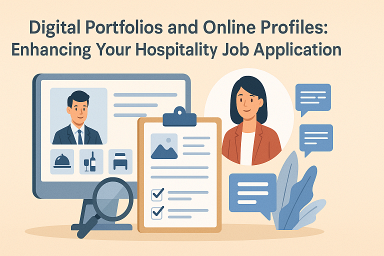
The hospitality sector is people-centric, fast-paced, and heavily reliant on soft skills and visual presentation. Whether you’re a front desk manager, event coordinator, F&B specialist, or chef, employers want to see more than your academic qualifications. They want proof of your creativity, communication, and customer service expertise.
This is where Digital Portfolios and Online Profiles offer a competitive edge:
- They visually present your experiences and capabilities.
- They help hiring managers quickly assess your suitability.
- They improve your visibility to recruiters and hospitality recruiters using LinkedIn, Indeed, or even Instagram.
According to a recent report from HospitalityNet, over 68% of employers in the hospitality industry now review applicants’ online presence before making a hiring decision. That means your Digital Portfolios and Online Profiles will be viewed even before your CV.
What is a Digital Portfolio in Hospitality?
A digital portfolio is an online collection of your work samples, testimonials, certificates, project photos, and personal statements that tell your professional story.
For hospitality professionals, a strong portfolio can include:
- High-quality images of events you’ve managed or culinary dishes you’ve prepared.
- Videos demonstrating your communication or service delivery skills.
- Links to online reviews or guest feedback.
- Copies of certifications in food safety, front office systems, or management.
- Slide decks of business development plans or event proposals.
Your portfolio can be hosted on personal websites (e.g., Wix, WordPress), platforms like Behance, or even shared through Google Drive as a clean PDF presentation.
Best Platforms for Hospitality Portfolios and Profiles
Choosing the right platform is essential for making your Digital Portfolios and Online Profiles effective. Here are some suggestions tailored to hospitality:
1. LinkedIn
LinkedIn remains a powerhouse for professional networking. Your profile acts as a living resume. Use the “Featured” section to upload images, videos, or links to your work. Regularly post industry-relevant content to boost visibility.
Check our article on “Hospitality Resume Mistakes and How to Avoid Them” to make sure your LinkedIn complements your resume effectively.
2. Instagram & YouTube
For chefs, event planners, or decorators, visual platforms like Instagram and YouTube are powerful. Create content that reflects your branding – cooking reels, before-and-after event setups, or customer testimonials.
3. Personal Website
Having a personalized URL adds credibility. It shows tech-savviness and a professional approach. Many hospitality professionals now use platforms like Squarespace, WordPress, or Wix to build their portfolios.
4. Canva Portfolios
Canva provides ready-made templates that are ideal for creating quick, aesthetic portfolios. You can share them via a link or PDF, making them highly versatile.
Essential Elements in Digital Portfolios and Online Profiles
To truly enhance your hospitality job application, your Digital Portfolios and Online Profiles should be strategic, not just pretty. Include the below items:
• Professional Bio
Write a short but impactful bio. Mention your years of experience, specialties (e.g., event planning, luxury hotel management), and personal mission.
• Visual Evidence of Skills
Hospitality thrives on presentation. Showcase visuals – guest welcome kits you designed, buffet layouts, wine-pairing tables, or guest feedback snapshots.
• Certifications and Awards
Highlight relevant certifications – HACCP, Sommelier training, or digital marketing for hospitality. Don’t forget awards or recognition you’ve received.
• Testimonials
Add brief quotes from guests, clients, or supervisors. Video testimonials are even more powerful if available.
• Contact Information
Ensure recruiters can easily contact you. Include professional email, phone number, and links to all major online profiles.
How to Optimize for Visibility
It’s not enough to simply have Digital Portfolios and Online Profiles; they must be optimized for discoverability. Here are some tips:
- Use SEO-friendly descriptions with industry-relevant keywords.
- Update regularly with new projects or achievements.
- Link your portfolio to your email signature and LinkedIn.
- Use hashtags on platforms like Instagram and YouTube.
Example: A concierge uploading a video on handling high-profile clients could use hashtags like #luxuryhospitality #conciergelife #guestexperience
[Internal Link: Learn more about the Essential Hospitality Skills you should highlight in your portfolio.]Mistakes to Avoid When Creating Digital Portfolios and Online Profiles
While these tools are powerful, they can also harm your chances if done poorly. Avoid these common mistakes:
- Unprofessional Photos or Content – Keep it polished.
- Outdated Work – A portfolio from five years ago might not reflect your current skills.
- Over-cluttered Layouts – Ensure a clean, easy-to-navigate design.
- Neglecting Mobile Optimization – Many recruiters will check your profile from their phones.
- Not Including Metrics – Quantify your results: “Increased guest satisfaction score by 20% in 6 months.”
Real-Life Example
Meet Priya, a banquet manager from Mumbai. After job-hunting for months, she created a digital portfolio with photos of events she coordinated, short videos of client testimonials, and a visual resume. She shared it on LinkedIn, added the link to her resume, and started engaging with hospitality forums.
Within three weeks, she received two interview calls—one from a 5-star resort in Goa and another from an international hotel chain.
Her story isn’t unique. Well-crafted Digital Portfolios and Online Profiles consistently help professionals stand out.
Bonus Tips for Students and Freshers
Even if you’re just starting out, you can build an impactful digital presence:
- Share projects from your hospitality course (e.g., mock hotel plans or service flowcharts).
- Highlight internships or volunteer experiences.
- Create “Before & After” posts of events or tasks you managed.
Use free tools like Canva, Wix, or even Instagram reels to document your growth journey.
External Resources and Tools
Here’s a helpful external guide on creating effective digital portfolios:
👉 How to Build an Online Portfolio – The Muse
Conclusion: Stand Out With Your Digital Identity
As the hospitality industry evolves, recruiters seek more than static resumes. Your ability to showcase real-world skills, personality, and growth through Digital Portfolios and Online Profiles can tip the scales in your favor.
Incorporate storytelling, maintain professionalism, and stay updated. When crafted strategically, your digital presence becomes more than a showcase — it becomes your career elevator.
Start building yours today — because your next job might be just one click away.



This series I liked. and nowhere I found this step by step guides, like you do. Waiting for more.